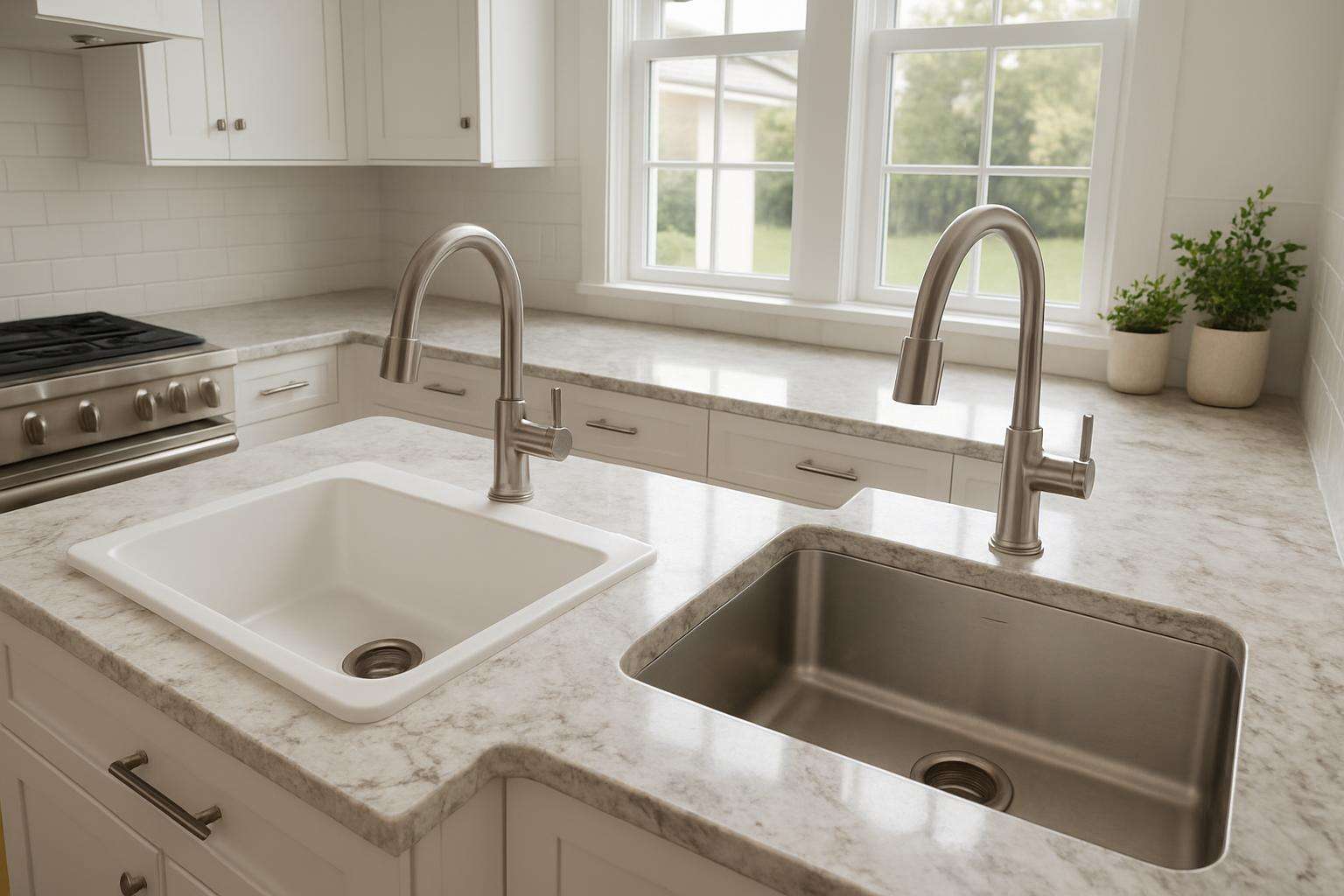
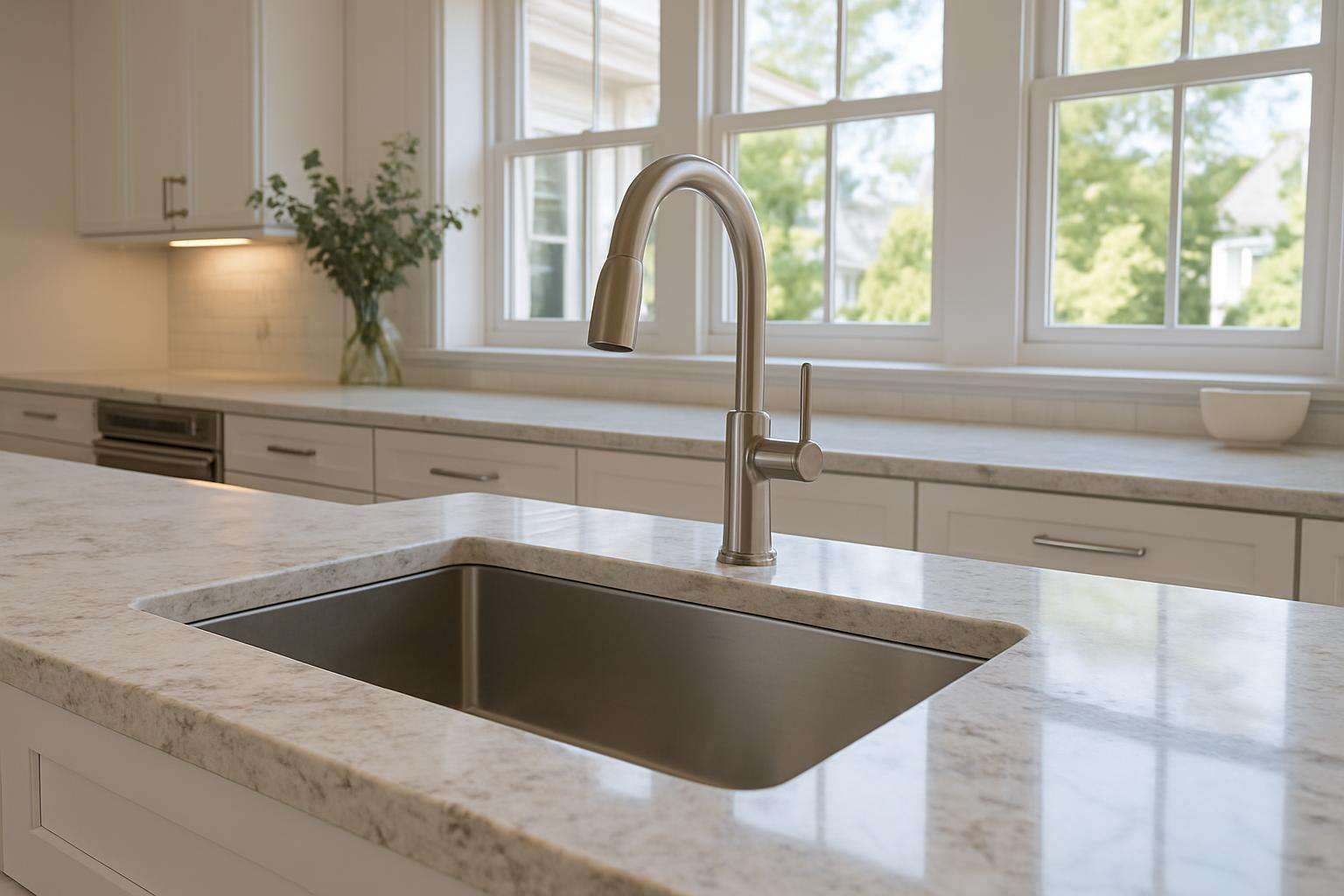
The undermount sink cutout is one of the most technically precise elements of any countertop fabrication project. When it is done right, the sink appears to float seamlessly below the stone surface — a clean, elegant look that is easy to wipe down and keeps the focus on the countertop material. When it is done poorly, even a beautiful slab is undermined by an uneven reveal, rough edges, or a gap that collects debris.
What Is a Sink Cutout Reveal?
The reveal refers to the amount of countertop edge that is visible around the perimeter of the sink opening. This is the thin band of stone between the sink rim and the edge of the cutout — it determines how the transition between sink and stone appears from above.
Three primary reveal types are used in Columbus kitchen and bathroom fabrications:
The Three Main Reveal Types
Positive Reveal
A positive reveal means the countertop edge extends slightly over the sink rim — the stone overlaps the top edge of the sink by a small amount, typically 1/8 to 3/16 of an inch. This is the most common undermount sink cutout configuration. It protects the sink rim from view, creates a clean line, and gives the installer a small margin for adjustment during fitting. Most Columbus homeowners default to a positive reveal unless they have a specific design preference.
Negative Reveal
A negative reveal sets the countertop edge inside the sink rim — the stone is cut slightly smaller than the sink’s top flange, so a thin line of the sink rim is visible from above. This creates a more contemporary, deliberate look. It requires more precise fabrication since there is less margin for adjustment, and the exposed rim must be finished cleanly. Some clients prefer negative reveals for modern kitchens where every detail is intentional and visible.
Flush (Zero) Reveal
A flush reveal — sometimes called a zero reveal — aligns the countertop edge exactly with the inner edge of the sink rim. No overlap and no exposure. This is the most demanding reveal to execute because it requires the countertop edge and the sink lip to be precisely co-planer. Even a small discrepancy is visible. Flush reveals are requested by clients who want the most seamless visual transition possible between stone and sink.
Why the Undermount Sink Cutout Matters
The quality of the undermount sink cutout affects the finished kitchen in three concrete ways:
Cleanability — a tight, well-finished cutout edge prevents water and debris from accumulating at the transition between stone and sink. A poorly executed cutout leaves gaps that become impossible to keep clean.
Aesthetics — the reveal is visible every time you look at the sink. An uneven or rough reveal draws the eye in the wrong way and diminishes the appearance of even expensive stone.
Longevity — a precisely cut and well-sealed undermount cutout protects the substrate from moisture over time. Poor execution can lead to delamination or water damage under the stone.
How We Execute the Undermount Sink Cutout at Impact Countertops
At our Columbus fabrication facility, every undermount sink cutout is executed using CNC machinery for accuracy and hand-finished for a polished edge. We work with the sink manufacturer’s template to ensure the cutout matches the sink’s exact dimensions, and we confirm the reveal specification with every client before cutting begins.
We also finish and polish the underside of the cutout edge — a detail that matters because it is visible inside the sink basin. An unfinished or rough edge on the underside is a sign of rushed work; we do not cut that corner.
For the most current standards on countertop fabrication and sink installation, the Natural Stone Institute provides industry guidelines our team follows.
Contact us to discuss your sink and countertop project with our Columbus fabrication team.
Frequently Asked Questions
Which undermount sink cutout reveal is most popular?
The positive reveal is the most common choice across Columbus kitchen projects. It is forgiving to install, looks clean and intentional, and works well with virtually any sink style.
Can the reveal type be changed after installation?
No. The reveal is determined by the cutout made during fabrication. Once the countertop is installed, changing the reveal would require removing the countertop and recut — which is not practical. This is why we confirm the reveal specification clearly before fabrication begins.
Does the stone type affect which reveal works best?
Yes. Softer stones like marble have a higher risk of chipping at a very thin edge, which makes extremely tight negative or flush reveals less appropriate. Harder stones like quartzite and engineered quartz handle tighter reveals better. Our team advises on the right specification for your specific material.
Do you finish the underside of the sink cutout edge?
Yes. We polish the underside of every undermount sink cutout to a finished edge. It is visible inside the basin and reflects the standard of workmanship we apply to every surface we fabricate.