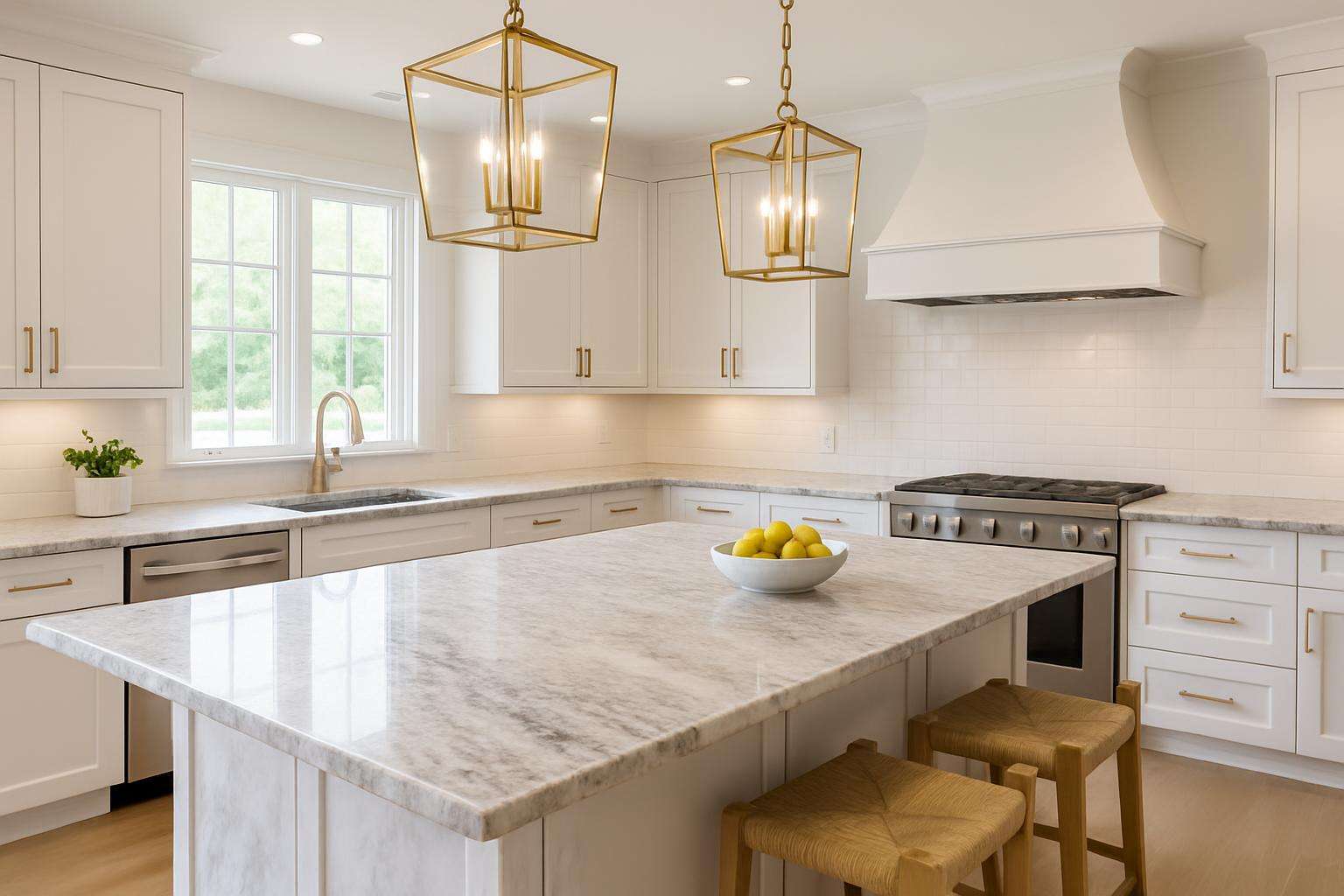
Not every stone project needs to start with a full slab. Impact Countertops maintains a remnant yard — a collection of stone pieces left over from larger fabrication projects — and these remnants are available for purchase at a fraction of the cost of full-slab material. For the right applications, a remnant is not a second choice. It’s the smart choice.
Countertop remnant yard Columbus is a key concern for Columbus homeowners who want their investment to last.

What’s in a Remnant Yard
When a kitchen countertop is fabricated from a full slab, the unused portions of that slab — the cutoffs from sink openings, the strip left over after cutting a long run, the section that didn’t fit the layout — come back to the shop as remnants. These pieces are real stone: the same granite, quartzite, marble, or engineered quartz that went into the original project, just in smaller dimensions.
Remnant sizes vary widely. Some pieces are small — 12 by 24 inches, suitable for a small shelf or decorative surface. Others are substantial: 18 by 36, 24 by 48, sometimes larger. A remnant large enough to cover a bathroom vanity, a laundry room folding surface, or a small island top is not unusual.
What makes the remnant yard interesting is the variety. Because the pieces come from projects across Impact’s full range of materials, you might find a piece of Taj Mahal quartzite sitting next to a section of Absolute Black granite, next to a remnant of Calacatta marble. For a buyer willing to be flexible on which specific material they use, the remnant yard can yield high-end stone at very accessible prices.
Best Uses for Stone Remnants
The constraint on remnant use is size — you need a piece that fits your application. Within that constraint, the uses are broad.
Countertop remnant yard Columbus represents one of the most important decisions Columbus homeowners face when selecting stone surfaces. Understanding countertop remnant yard Columbus helps ensure long-term satisfaction with your kitchen investment.
Bathroom vanity tops. A standard single-sink vanity top runs roughly 22 inches deep by 48 to 60 inches wide. Many remnants cover this comfortably. Installing a stone vanity top from a remnant — even a premium quartzite or marble — can cost a fraction of what a full-slab project would run. The result is the same quality stone, the same fabrication, the same finish. Just a smaller piece.
Furniture updates. An outdated nightstand, an end table that’s seen better days, a console that needs a refresh — a stone top transforms these pieces. A remnant cut to fit a furniture top and polished to match the stone’s finish turns a worn piece into something that looks intentional and current. This is a particularly good use for remnants with interesting veining or color: a dramatic marble remnant on a simple nightstand creates a design moment that a solid wood top never could.
Laundry and utility rooms. A stone folding surface in a laundry room is more practical than it sounds — stone is impervious to heat from clothes fresh from the dryer, easy to clean, and essentially indestructible. A remnant that’s large enough for a folding counter makes a utility space dramatically more functional without requiring the budget of a kitchen project.
Bar tops and entertaining spaces. A small bar area, a butler’s pantry countertop, or an outdoor entertaining surface can often be covered by a single remnant. These applications benefit from stone’s practical properties (heat resistance, easy cleaning) and don’t always require the large dimensions that kitchen projects demand.
Fireplace surrounds and hearths. The hearth in front of a fireplace is typically a modest-sized piece — a remnant can cover it easily, and stone is the natural material choice for a fire-adjacent surface. A marble or granite remnant on a fireplace hearth creates a cohesive material story if it complements other stone in the space.
How to Shop the Remnant Yard
The remnant inventory changes constantly as new projects are completed and new pieces come in. The best approach is to visit in person — photographs of remnants don’t fully communicate the piece’s size, the actual color, or the specific veining. What looks like a large piece in a photo may be smaller than your application requires; what looks like a faint vein in a photo may be dramatically bold in person.
Come with your measurements. Know the dimensions of the surface you’re working with — vanity top, furniture piece, bar top — and have that written down so you can hold it against pieces in the yard. Also come with a sense of what materials and colors work with your existing space. The remnant yard offers variety but not infinite choice; being flexible within a color family (warm neutrals, cool grays, bold blacks) gives you more to work with than arriving with a very specific material in mind.
The fabrication process for a remnant is the same as for a full-slab project: the piece is cut to your dimensions, edges are profiled, cutouts are made as needed, and the piece is polished and finished to the same standard as any other Impact project. What you’re getting at a lower price is the material, not a reduction in fabrication quality.
For more on countertop remnant yard Columbus, the Natural Stone Institute provides authoritative industry guidance. To discuss countertop remnant yard Columbus with our team, contact Impact Countertops in Columbus.
FAQ
Countertop remnant yard Columbus: How much do remnants cost compared to full-slab projects?
Remnant pricing varies by material, size, and what’s in inventory at any given time, but in general, remnant material costs significantly less than purchasing a full slab — sometimes 50% or more less. The fabrication cost (cutting, edging, finishing, installation) is similar regardless of whether the stone came from a remnant or a full slab, since the labor involved is the same. For smaller projects, the remnant savings on material can make a meaningful difference in total project cost.
Can I request a specific material and wait for it to come in as a remnant?
You can let us know what you’re looking for and we’ll keep an eye out, but remnant availability is unpredictable — it depends on what projects are in the shop and what material happens to be left over. For a project where a specific stone is non-negotiable, a full slab is the reliable path. For a project where you’re flexible on material and primarily want a high-quality stone surface at a good price, checking the remnant yard when it matters is the right approach.
Are remnants a good option for a bathroom countertop remodel?
Often yes — bathroom vanity dimensions are frequently within remnant size ranges, and the material savings can be substantial. A marble or quartzite vanity top from a remnant at a fraction of full-slab cost is one of the better ways to introduce premium stone into a home without the budget of a full kitchen project. The result is identical in quality to a full-slab installation.
Can remnants be used for outdoor applications?
Depending on the material, yes. Granite and quartzite remnants are suitable for outdoor use — both materials handle moisture, temperature cycling, and UV exposure well. Marble remnants are less appropriate outdoors due to marble’s sensitivity to freeze-thaw cycles and acid rain. Porcelain, if available as a remnant, is also an excellent outdoor surface. If you’re looking for a remnant for an outdoor application, ask about the material’s suitability when you visit.
What edge profiles are available for remnant projects?
The same edge profile options available for full-slab projects are available for remnant projects — eased, beveled, bullnose, ogee, mitered, and others depending on the material and its thickness. The edge is cut and finished to the same standard as any other Impact project.
If you’re interested in seeing what’s currently in the remnant yard, the best step is to reach out and plan a visit. Inventory changes, and the best pieces tend to move quickly. We’re glad to walk you through what’s available and help identify pieces that could work for your specific project.