
Choosing between a top mount vs undermount sink is one of the most consequential decisions in a kitchen countertop project — and it is one where getting the right answer depends heavily on your countertop material, your design goals, and how you actually use your kitchen. Columbus homeowners ask us this question constantly, so here is a straightforward breakdown of both options.
How Each Sink Type Works
Top Mount Sinks (Drop-In)
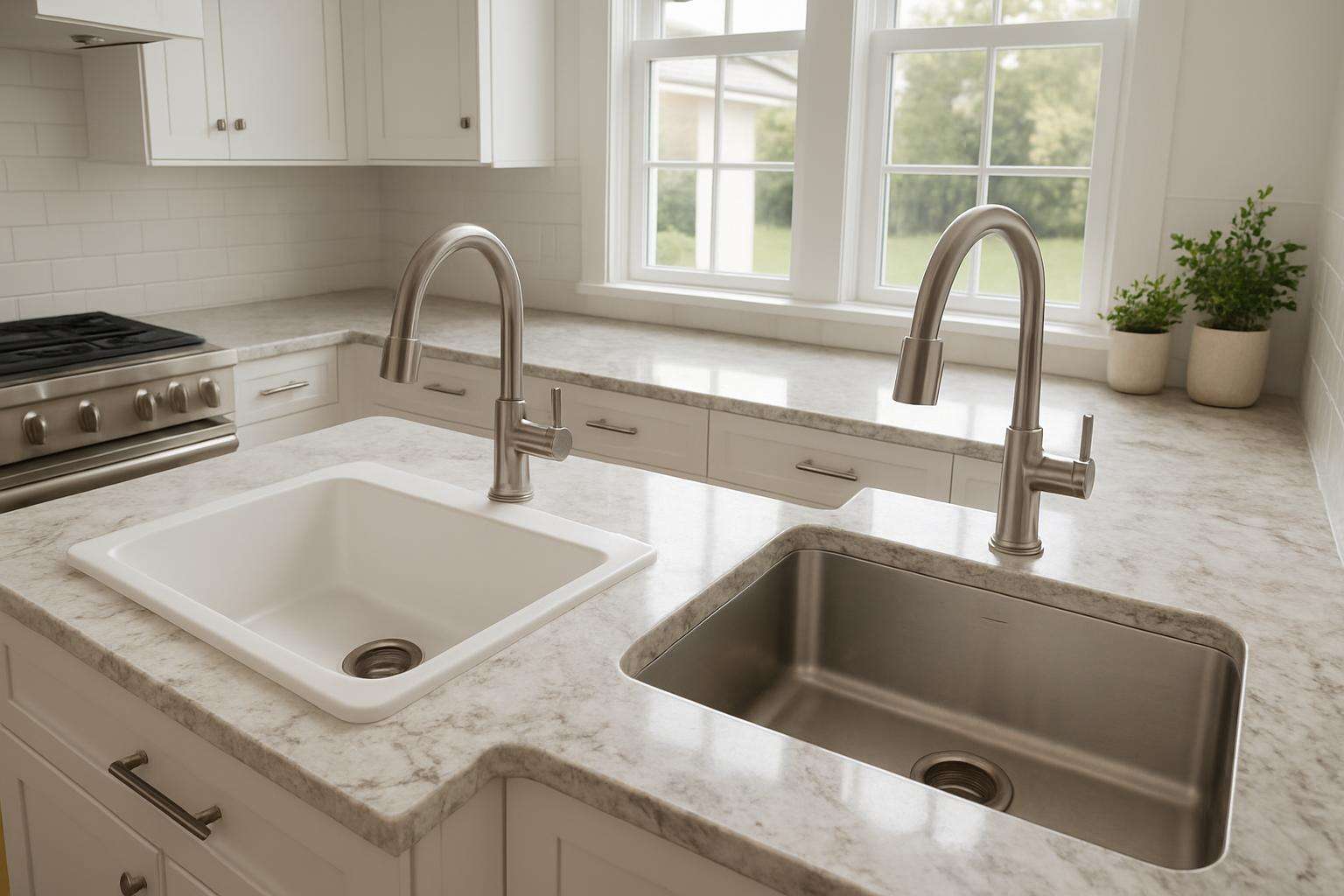
A top mount sink — also called a drop-in sink — sits on top of the countertop. The sink rim rests on the countertop surface and is visible from above. Installation is relatively straightforward: a hole is cut in the countertop, and the sink drops in and is secured from below. The rim covers the edge of the cutout, which means less precision is required in the stone fabrication.
Undermount Sinks
An undermount sink is mounted below the countertop surface, with the sink attached to the underside of the stone. The countertop edge is fully visible around the basin, which means the stone cutout must be precise and finished. There is no rim sitting on top — the transition from countertop to sink basin is clean and unobstructed.
Top Mount vs Undermount Sink: A Direct Comparison
Cleaning and Hygiene
This is where undermount wins decisively. With a top mount sink, the rim sits on the countertop and creates a seam where water, food debris, and bacteria can accumulate. No matter how carefully you clean, that seam is difficult to keep perfectly hygienic over time.
With an undermount sink, you can sweep crumbs and water directly off the countertop into the basin. There is no rim to trap debris. For Columbus households that prioritize kitchen hygiene, this is a significant practical advantage.
Aesthetics
Undermount sinks are considered the premium aesthetic choice. They create a seamless, uninterrupted countertop surface that showcases the material — particularly important when you have invested in a beautiful natural stone or quartz slab. The clean lines of an undermount installation read as intentional and refined.
Top mount sinks have a more utilitarian appearance. The rim is always visible, and while some contemporary drop-in styles have improved significantly, they rarely achieve the visual cleanliness of an undermount installation.
Installation and Countertop Compatibility
Top mount sinks can be installed in virtually any countertop material, including laminate, tile, and wood — materials that are not ideal for undermount because they would be exposed to moisture at the cutout edge. For stone countertops — quartz, granite, marble, quartzite — undermount sinks are strongly recommended and are the industry standard.
Undermount installation requires the countertop edge at the cutout to be finished, polished, and properly sealed. This is precision fabrication work that our Columbus team performs on every project.
Cost Considerations
Undermount sinks generally cost more — both the sink itself and the fabrication. The cutout must be precise, the edge must be finished, and the sink must be properly secured and sealed from below. Top mount installation is simpler and less expensive.
However, if you are already investing in a premium stone countertop, the incremental cost of undermount fabrication is typically a small fraction of the overall project budget and is well worth it for the aesthetic and functional upgrade.
Which Is Right for Your Columbus Kitchen?
For virtually any homeowner installing a natural stone or engineered quartz countertop, an undermount sink is the right choice. The cleaner look, easier maintenance, and compatibility with premium materials make it the obvious selection.
Top mount makes sense for budget renovations, laminate or tile countertops, or situations where the sink needs to be replaced quickly without disturbing the countertop. It can also be appropriate in utility or laundry room applications where aesthetics are secondary.
If you are remodeling a Columbus kitchen with a premium countertop, plan for undermount. You will not regret it.
Contact our Columbus fabrication team to discuss your sink selection and countertop project.
What to Know About the Fabrication Process
At Impact Countertops, we handle undermount sink cutouts in-house at our Columbus facility. Every cutout is executed with CNC precision and hand-finished to a polished edge — including the underside visible inside the basin. We work with your sink template before fabrication begins and confirm the reveal specification to ensure the finished installation meets your expectations.
For professional standards on countertop fabrication and sink installation, the Natural Stone Institute provides authoritative guidance.
Frequently Asked Questions
Can I switch from a top mount to undermount sink without replacing my countertop?
Generally no. The cutout dimensions differ, and the edge finishing required for undermount is not present in a top mount installation. Switching typically requires a new countertop fabrication.
What materials work best with undermount sinks?
Granite, quartz, quartzite, marble, and porcelain are all excellent choices for undermount installations. Laminate and tile are not recommended because moisture can penetrate the cutout edge and damage the substrate.
How is an undermount sink secured to the countertop?
Undermount sinks are secured using epoxy adhesive and mechanical clips attached to the underside of the countertop. Properly installed, they are extremely secure and should not shift over the life of the installation.
Is the top mount vs undermount sink decision permanent?
For all practical purposes, yes. The decision is made at the time of countertop fabrication, and changing it afterward requires replacing the countertop. Choose carefully and consult your fabricator before finalizing your selection.




Leave a Reply