
Choosing the right stone countertop for your Columbus home involves more than aesthetics and budget — it also means understanding how each material behaves in daily use and what you are willing to do to maintain it. Stone countertop care and maintenance requirements vary significantly across materials, and matching those requirements to your actual lifestyle prevents regret down the road.
Marble: Beautiful but Demanding
Marble is porous and soft by stone standards. It requires sealing at installation and periodic resealing — annually for kitchens in active use. More critically, marble etches from acidic substances. Lemon juice, vinegar, tomato sauce, and wine will leave dull marks in the polished surface if not wiped up promptly. For Columbus homeowners who cook frequently and want a pristine surface at all times, marble requires a level of attentiveness that not everyone is comfortable with.
That said, many clients embrace marble’s aging process. The patina that develops over years of use — the softening of the polish, the subtle marks of a kitchen well used — is something many homeowners find beautiful and characterful. The right question is: how do YOU feel about imperfection?
Granite: Durable and Low-Maintenance
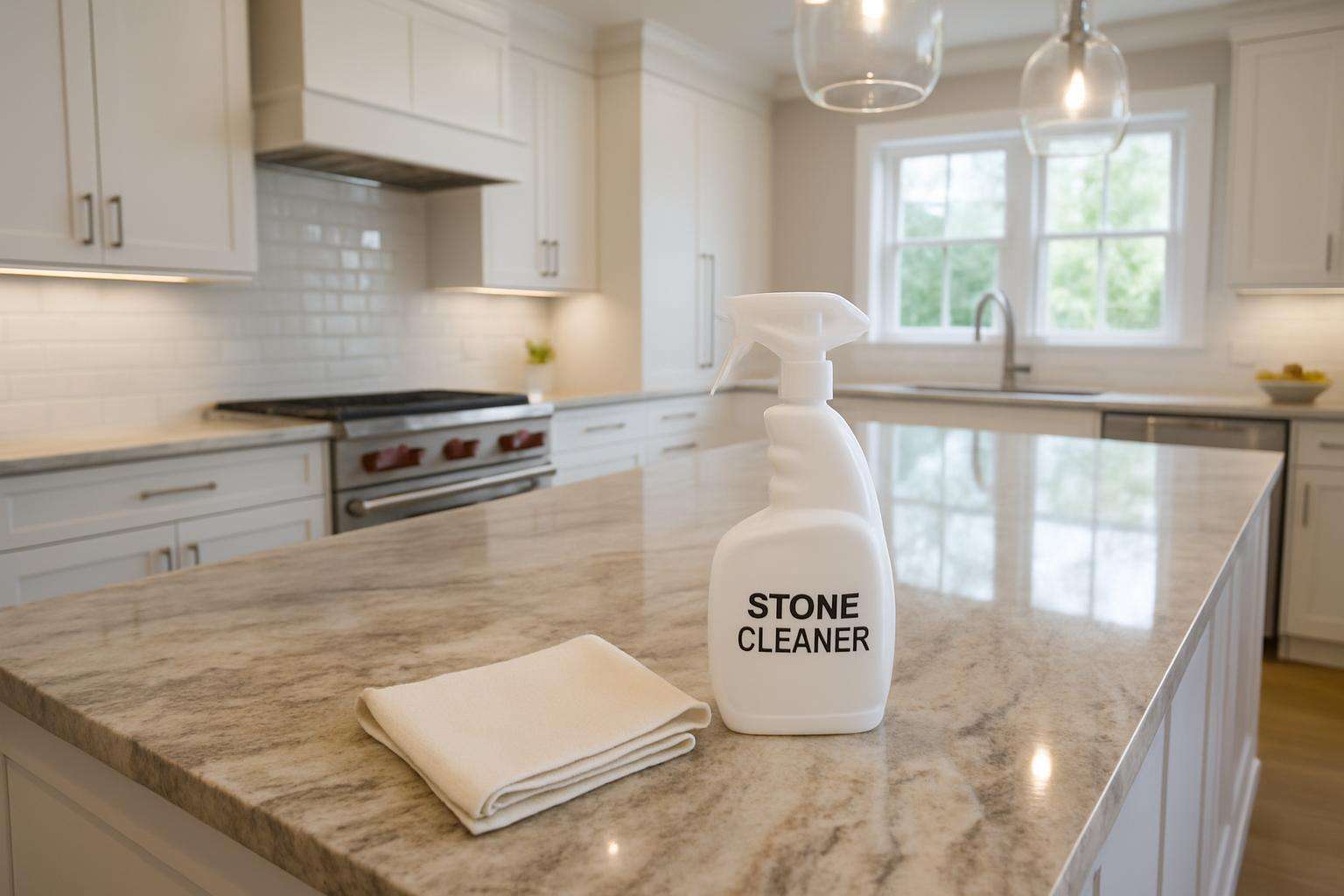
Granite is one of the most durable natural stones available and requires relatively modest care. It should be sealed at installation and resealed every one to three years depending on use. Granite resists scratching, heat, and etching far better than marble, which makes it a solid choice for busy Columbus kitchens where durability is a priority. Daily care is simple: wipe with a soft cloth and a pH-neutral cleaner.
Quartzite: High Performance, Natural Beauty
Quartzite is harder than granite and resists etching better than marble, making it one of the most practical natural stone choices for kitchen countertops. It does require sealing — the frequency depends on the specific quartzite variety, as some are denser than others. For stone countertop care and maintenance that balances low effort with premium aesthetics, quartzite is increasingly the recommendation our Columbus design team makes first.
Engineered Quartz: The Lowest-Maintenance Option
Engineered quartz requires no sealing and resists staining, scratching, and etching better than any natural stone. Daily cleaning with a mild soap or pH-neutral cleaner is all that is needed. For Columbus homeowners with young children, heavy cooking schedules, or simply a preference for worry-free surfaces, quartz delivers premium aesthetics without the maintenance commitment of natural stone. The trade-off is that quartz can be damaged by prolonged heat exposure — always use trivets.
Porcelain: Virtually Indestructible
Large-format porcelain slabs require almost no maintenance beyond routine cleaning. They do not stain, etch, or require sealing. UV-stable and frost-resistant, they are equally suited to outdoor kitchens and interior spaces. The primary care consideration is avoiding impact — porcelain, while extremely hard, can chip at edges if struck sharply.
Matching Material to Lifestyle
Before selecting your countertop material, ask yourself honest questions: How often do you cook? Do you have young children? Are you comfortable wiping up spills immediately? Do you mind periodic sealing? Do you want the countertop to look the same in ten years as it does today?
Your answers will guide you toward the right material more accurately than any aesthetic preference alone. Our Columbus design team asks these questions in every consultation because stone countertop care and maintenance alignment with your lifestyle is fundamental to long-term satisfaction.
Contact our Columbus team to discuss which material fits your kitchen and how you actually live. For industry care standards, the Natural Stone Institute is the authoritative resource.
Frequently Asked Questions
How often do stone countertops need to be sealed?
It depends on the material. Granite typically needs sealing every one to three years. Quartzite varies by density — some annually, some less often. Marble benefits from annual sealing in kitchen environments. Engineered quartz and porcelain never require sealing.
What is the best daily cleaner for stone countertops?
A soft cloth with warm water and a pH-neutral cleaner works for all natural stone. Avoid acidic cleaners, bleach, and abrasive scrubbers — all can damage stone surfaces over time.
Can I put hot pans directly on a stone countertop?
Granite, quartzite, and marble can handle brief heat contact, but thermal shock from very hot pans can cause cracking over time. Engineered quartz is vulnerable to sustained heat. Use trivets as a consistent habit regardless of material.
Does Impact Countertops offer sealing services?
Yes. We seal all natural stone at installation and offer resealing services for existing countertops. Contact our Columbus team to schedule.




Leave a Reply