
Translucent quartzite countertops represent the furthest edge of what natural stone can do in a luxury interior. When backlit with LED panels, certain quartzites — those with high crystal content and low iron density — transmit light through the slab, illuminating the veining and mineral structure from within. The effect is unlike anything else in stone: warm, ethereal, and completely unique to the specific piece of stone you’re standing in front of. At Impact Countertops in Columbus, we work with designers and clients to incorporate translucent quartzite into bars, kitchen islands, bathroom vanities, and feature walls where this extraordinary material can truly show what it’s capable of.
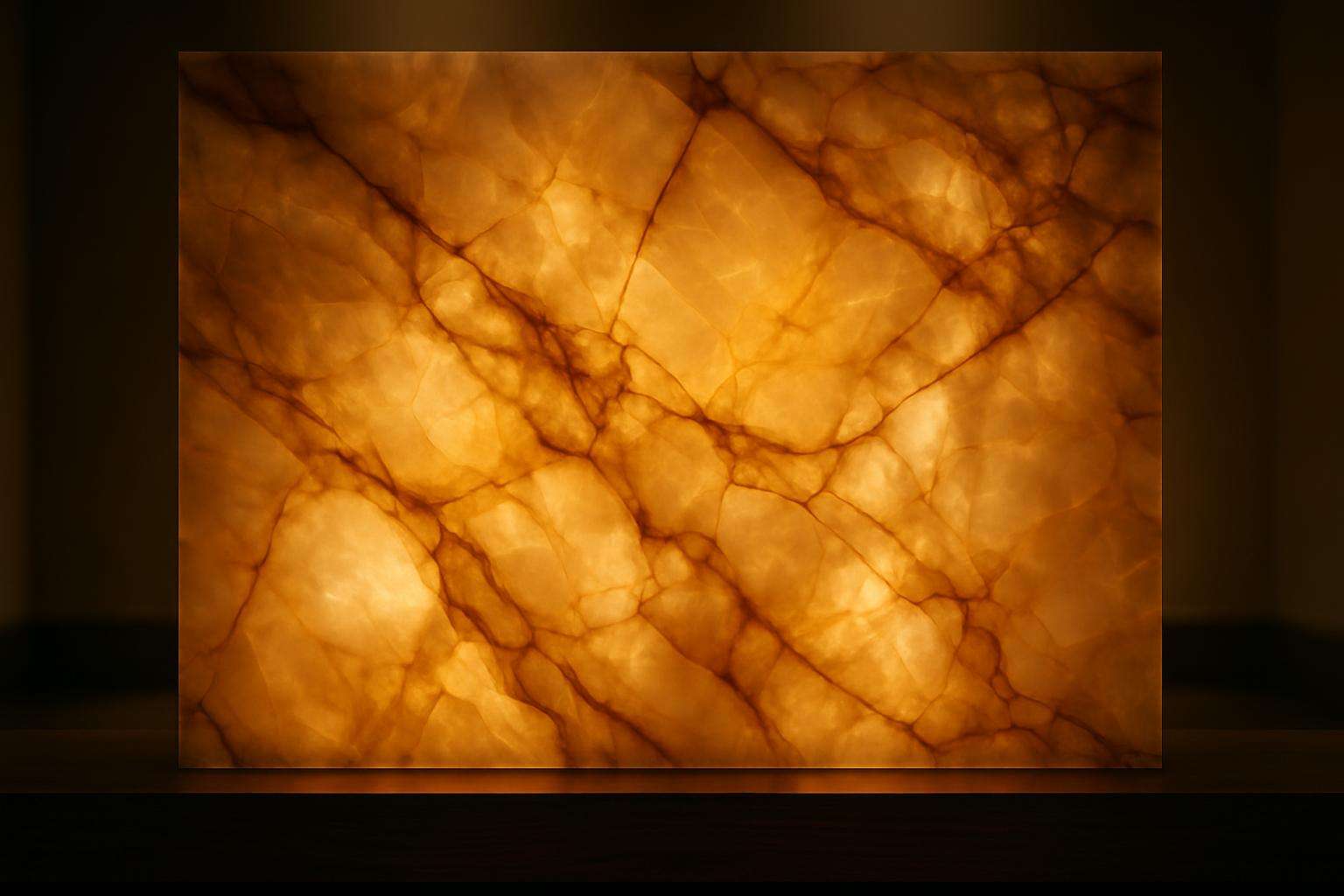
What Makes Quartzite Translucent?
Not all quartzite is translucent. Most quartzites have mineral compositions and densities that block light entirely. Translucent varieties share specific characteristics: very high quartz crystal content, relatively low iron oxide (which causes opacity), and thin, consistent mineral layering that allows photons to pass through. The result at the slab level is a stone that, when held up to light, glows rather than blocks.
The most notable translucent quartzites available today include Cristallo, which has a brilliant white clarity with delicate silver veining; Via Láctea, a dramatic white stone with sweeping movement that becomes almost otherworldly when backlit; and certain slabs of White Macaubas that display exceptional translucency despite their dense appearance in natural light. Slab selection for backlighting requires evaluating each piece individually — two slabs from the same quarry can have significantly different light transmission.
Applications for Translucent Quartzite
Kitchen islands. A backlit translucent quartzite island is the single most dramatic statement a kitchen can make. LED panels installed beneath the countertop face illuminate the stone from below, creating a glow effect that transforms the island from a surface into a light source. This works particularly well in open-plan spaces where the kitchen is visible from multiple rooms.
Bar tops and back bars. Translucent quartzite on a bar top with LED underlighting creates a cocktail-hour effect that designers describe as unforgettable. For clients building home bars or hospitality spaces in Columbus, backlit stone is the luxury detail that photographs beautifully and impresses every guest.
Feature walls and panels. Thin-cut translucent quartzite panels installed over a light source create backlit wall installations that serve as functional art. These are increasingly popular in entry halls, dining rooms, and primary suites where a dramatic design gesture is the goal.
Bathroom vanities. In a spa-style master bath, a translucent quartzite vanity top with understated LED underlighting creates ambient illumination that’s practical and magical at the same time.
Technical Considerations for Backlit Stone
Backlighting translucent quartzite requires close collaboration between the stone fabricator, the lighting designer, and the installer. The slab must be cut to appropriate thickness — typically 2cm for maximum translucency — and mounted over a diffusion panel that distributes LED light evenly across the full slab surface. Hot spots and uneven illumination are common mistakes when the lighting design isn’t properly executed. Impact works directly with your lighting consultant to ensure the installation achieves the intended effect. Learn more about natural stone standards from the Natural Stone Institute.
Interested in backlit translucent quartzite for your Columbus project? Contact Impact Countertops — our team can guide you through slab selection and the technical requirements for a successful illuminated installation.
FAQ
What quartzites are most translucent?
Cristallo, Via Láctea, and select slabs of White Macaubas are among the most reliably translucent quartzites available. Translucency varies by individual slab — Impact evaluates each piece for light transmission before recommending it for a backlit application. The best approach is to view candidate slabs backlit in person before committing to a selection.
Does backlighting damage the stone?
No. LED lighting generates minimal heat and poses no risk to the stone. The LED panels are installed in the structure beneath or behind the stone, not in contact with it. The stone itself is unaffected by the light source — it simply transmits the light through its crystal structure.
Can any countertop stone be backlit?
Only stones with sufficient translucency produce a meaningful backlit effect. Dense, opaque stones — most granites, dark marbles, soapstone — will not transmit light regardless of how powerful the light source is. True translucent quartzites and some onyx slabs are the primary candidates for effective backlighting in countertop and panel applications.
How thick should translucent quartzite be for backlighting?
2cm (3/4″) is the most common thickness for backlit translucent quartzite applications. This provides adequate structural integrity while allowing optimal light transmission. Thicker slabs (3cm) transmit less light and may show less dramatic effect. Impact can advise on the ideal thickness based on the specific slab and the intended lighting setup.
Is backlit translucent quartzite very expensive?
Translucent quartzite slabs command a premium over standard stone due to their rarity and the selectivity required in sourcing. The backlighting system adds additional cost at installation. The total investment for a backlit translucent quartzite island or feature wall is significant — but for the right project and client, it produces results that no other material can match.




Leave a Reply