
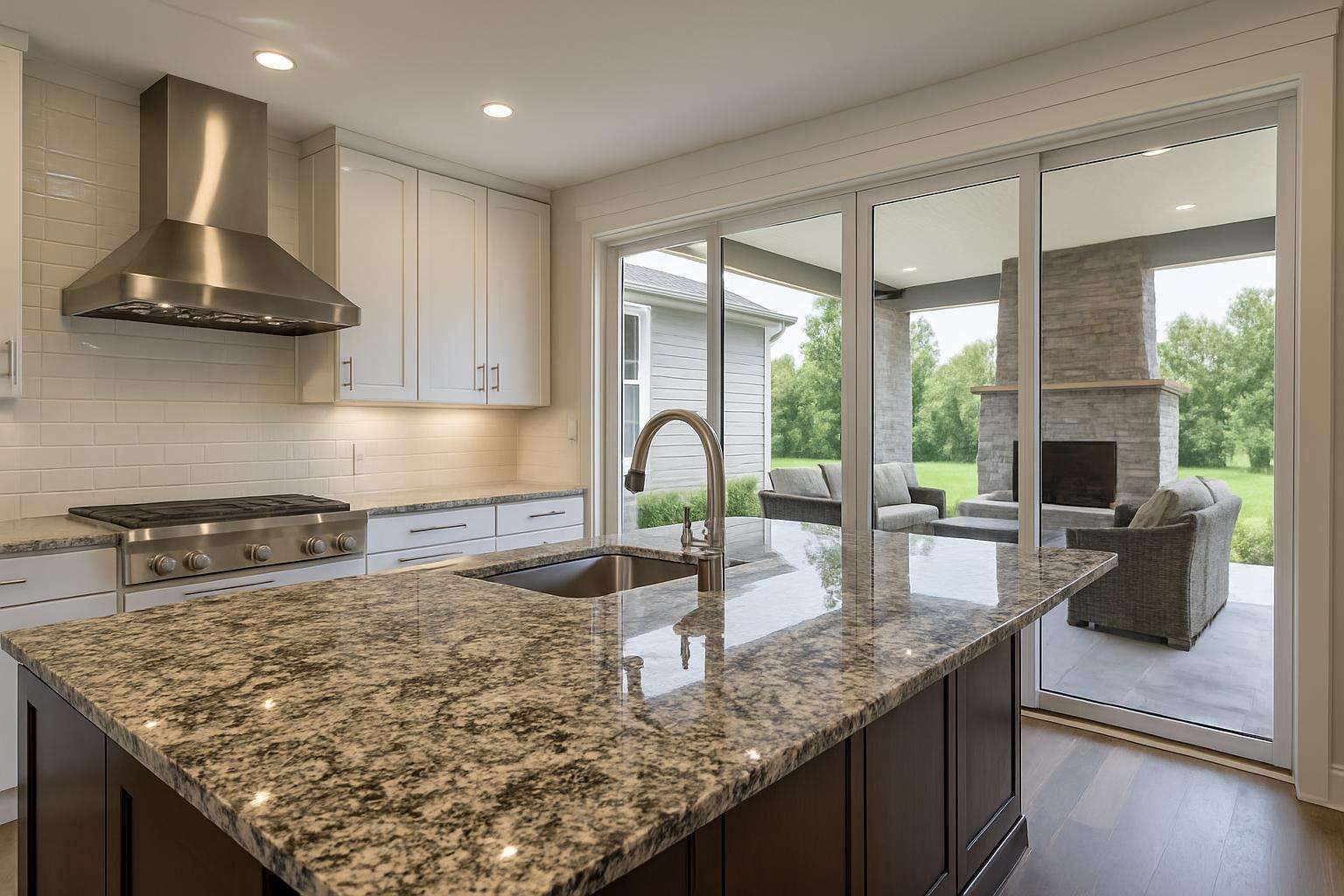
Granite outdoor kitchen countertops are one of the smartest investments you can make in an outdoor living space. Granite is quarried from the earth’s crust — a material that formed under extraordinary heat and pressure — which makes it naturally suited to the demanding conditions of an outdoor kitchen: direct sunlight, temperature swings, spills, and heavy use. If you are building or renovating an outdoor kitchen in Columbus, Ohio, granite delivers the durability, low maintenance, and visual impact that outdoor spaces demand.
Why Granite Works Outdoors
Granite outdoor kitchen countertops outperform most alternatives in the outdoor environment for several reasons. First, granite is UV-stable — it does not fade or discolor with sun exposure the way some engineered stones can. Second, it is highly heat-resistant, withstanding the thermal output of grills, smokers, and side burners without cracking or scorching. Third, granite is one of the hardest natural stones available, resisting the scratches and impact that come with outdoor cooking, entertaining, and weather events.
Sealing granite annually provides moisture protection — important in Ohio’s freeze-thaw climate — and keeps the surface stain-resistant through the grilling season and beyond.
Best Granite Colors for Outdoor Kitchens
Absolute Black and Dark Granites
Dark granites — Absolute Black, Black Galaxy, Steel Grey — create a sleek, contemporary outdoor kitchen that photographs beautifully against stone veneer cabinetry and stainless appliances. Dark tones also hide staining from grease and food more effectively than lighter options.
Tan Brown and Giallo Ornamental
Warmer granites in tan, gold, and brown tones harmonize naturally with outdoor environments — wood pergolas, stone pavers, and garden landscaping. These tones feel organic and relaxed, suiting traditional and transitional outdoor living spaces.
Colonial White and Light Granites
Light granites with black and grey fleck patterns create a classic, clean look that reads as sophisticated even in an outdoor setting. They require slightly more attention to sealing to resist staining but reward the effort with a bright, open aesthetic.
Design Considerations for Outdoor Granite Countertops
When planning granite outdoor kitchen countertops, keep these factors in mind.
Slab vs. tile: Always use full stone slabs rather than tile for outdoor countertops. Grout lines in tile trap moisture and can crack with freeze-thaw cycles. A solid granite slab — sealed properly — eliminates this vulnerability entirely.
Edge profile: A simple eased or bullnose edge is the most practical for outdoor use — it is easy to wipe clean and has no sharp corners. Decorative edges like ogee or dupont can trap debris and moisture in outdoor settings.
Thickness: Standard 3 cm (1.25-inch) granite is appropriate for outdoor kitchen countertops. For longer unsupported spans over an outdoor bar, brackets may be needed.
Sealing: Seal granite outdoor kitchen countertops at installation and annually thereafter with a penetrating stone sealer rated for exterior use. The Natural Stone Institute offers guidance on proper sealing products and practices.
Our team at Impact Countertops fabricates and installs granite outdoor kitchen countertops throughout Columbus and the surrounding area. Contact us to get started on your outdoor kitchen project.
Frequently Asked Questions
Is granite good for outdoor kitchens?
Yes — granite outdoor kitchen countertops are UV-stable, heat-resistant, and extremely durable. They are one of the top-rated choices for outdoor kitchen applications in climates like Columbus, Ohio.
Does outdoor granite need to be sealed?
Yes. Seal granite outdoor kitchen countertops at installation and annually with a penetrating sealer rated for exterior use. This protects against moisture, freeze-thaw cycles, and staining.
What granite colors hold up best outdoors?
Darker granites like Absolute Black and Steel Grey show less staining and weathering over time. Mid-tone options like Tan Brown are also excellent. Light granites can be used outdoors but require more frequent sealing.
Can granite crack in cold weather?
Properly sealed granite will not crack from cold weather alone. The key is ensuring moisture cannot penetrate the surface and expand during freeze cycles. Annual sealing and a simple eased edge (which does not collect standing water) address this effectively.
Leave a Reply