
Granite and marble are two of the most beautiful natural stone countertop materials available — and also two of the most frequently mishandled when it comes to cleaning. Using the wrong products or techniques on natural stone can dull the surface, accelerate etching, or degrade the sealer that protects the stone. At Impact Countertops in Columbus, Ohio, we install granite and marble countertops regularly and always take time to walk homeowners through the proper care routine. This guide covers what to use, what to avoid, and how to keep natural stone looking its best for decades.
For authoritative guidance on natural stone care standards, the Natural Stone Institute provides detailed care resources for homeowners and professionals.
Daily Cleaning: What to Use on Granite and Marble
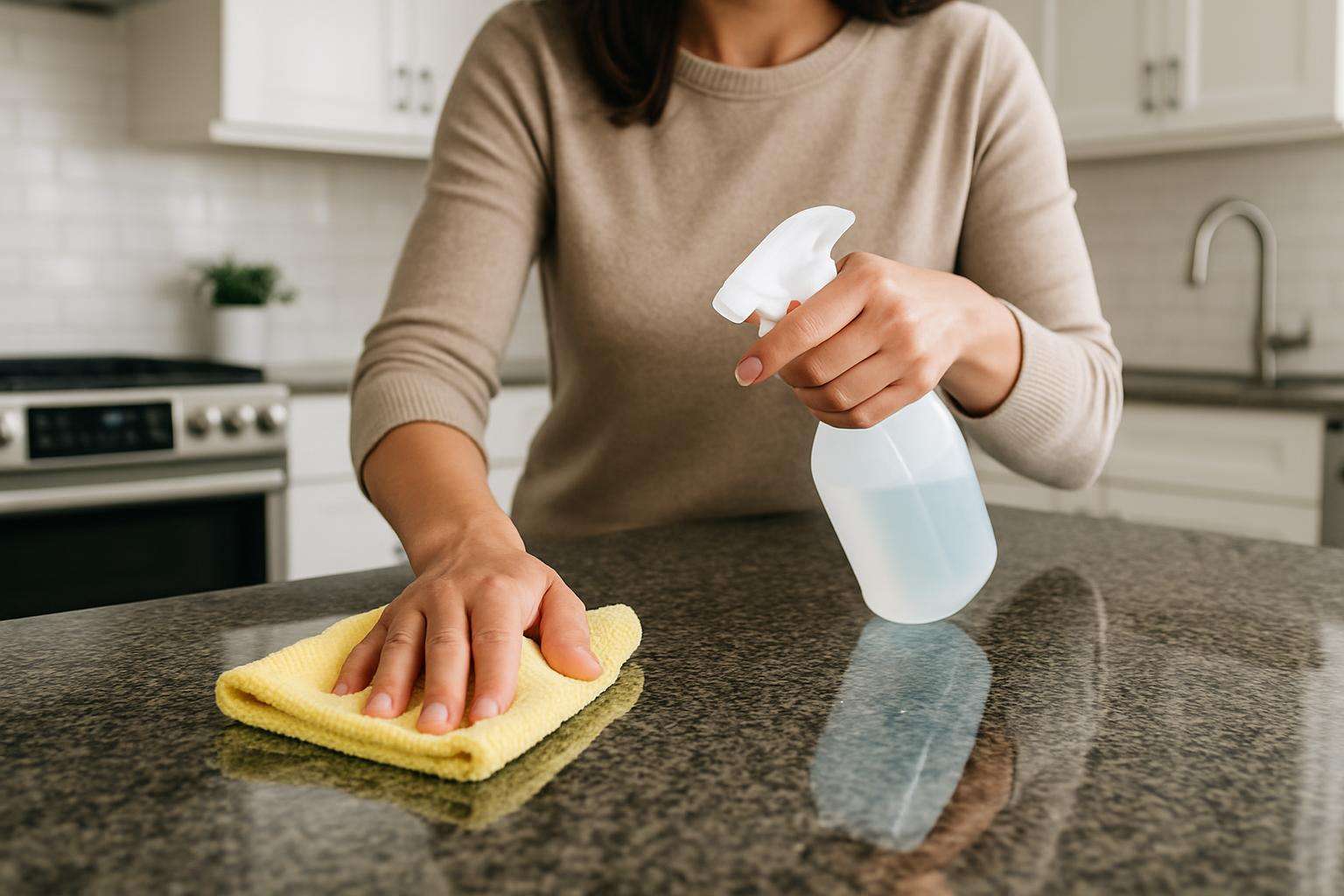
For daily cleaning of granite and marble countertops, the key is to keep it simple. The best approach is a soft cloth or sponge dampened with warm water, wiped across the surface, and then dried with a clean, dry cloth. This removes crumbs, dust, and light spills without introducing anything that could damage the stone or sealer.
If you need something with a bit more cleaning power, use a pH-neutral stone cleaner specifically formulated for natural stone surfaces. These are available at home improvement stores and online. Apply a small amount to the cloth (not directly to the stone), wipe gently, and rinse with clean water.
Dish soap can be used occasionally in a diluted solution, but avoid using it regularly. Over time, soap residue builds up on the stone surface and can dull the finish. If you use dish soap, rinse thoroughly with clean water and dry immediately.
What to Avoid on Granite and Marble
Avoid Acidic Cleaners: Marble is calcium carbonate-based and reacts chemically with acids, producing dull etched spots on the surface. Lemon juice, vinegar, most bathroom cleaners, and many all-purpose cleaners contain acids that will etch marble. Granite is more acid-resistant than marble, but acidic cleaners can still degrade its sealer over time. Never use acidic cleaners on either material.
Avoid Bleach and Ammonia-Based Cleaners: Products like Windex, bleach solutions, and ammonia-based cleaners can strip the sealer from natural stone and, with repeated use, damage the stone surface itself. These are common household products that many people reach for instinctively — but they’re harmful to sealed stone surfaces.
Avoid Abrasive Scrubbers: Steel wool, scouring pads, and abrasive powders will scratch the polished surface of both granite and marble. Always use soft cloths, microfiber towels, or non-scratch sponges.
Avoid Letting Spills Sit: While properly sealed granite and marble will resist staining for some time, spills of wine, coffee, oil, and colored liquids should be wiped up promptly — blotting rather than wiping to avoid spreading the spill.
Granite vs. Marble: Key Differences in Care
Granite is more forgiving than marble in daily kitchen use. It is harder (6–6.5 on the Mohs scale), more acid-resistant, and less prone to etching. Granite still requires sealing and proper cleaning, but it handles the occasional acidic food contact better than marble. For most granite countertops, annual sealing is sufficient.
Marble requires more attentive care. Its softer surface (3–4 Mohs) is more vulnerable to scratching, and its calcium carbonate composition means it will etch from even brief contact with acidic substances — including citrus fruits, vinegar, and tomato juice. In kitchen settings, a honed (matte) marble finish is often recommended over polished because etching is less visible on a matte surface. Marble countertops in high-use kitchens should be sealed every 6–12 months.
Sealing: The Foundation of Natural Stone Protection
Sealing is the most important maintenance step for both granite and marble. A penetrating sealer fills the microscopic pores in the stone surface, reducing the rate at which liquids can be absorbed and giving you time to wipe up spills before they stain. Sealer does not make the stone completely impervious — it buys you time.
To test whether your stone needs resealing, pour a small amount of water on the surface and watch what happens. If the water beads up and stays on the surface, the sealer is still effective. If the water absorbs into the stone and darkens it within a few minutes, it’s time to reseal. Most granite countertops in kitchen use should be resealed once a year. Marble may need sealing every six months in high-use areas.
Apply sealer yourself using a clean cloth, following the product instructions. Most penetrating sealers involve applying the product to the dry stone surface, allowing it to penetrate for a specified time (typically 15–30 minutes), then buffing off any excess before it dries on the surface.
Frequently Asked Questions About Cleaning Granite and Marble
Can I use vinegar to clean granite or marble countertops?
No. Vinegar is acidic and should never be used to clean granite or marble countertops. On marble, it will cause immediate etching — dull marks that cannot be removed without professional polishing. On granite, it won’t cause visible etching as quickly but will degrade the sealer over time, reducing the stone’s stain protection. Use only pH-neutral stone cleaners or warm water for daily cleaning.
What should I use to clean marble countertops safely?
For daily cleaning of marble countertops, use a soft microfiber cloth dampened with warm water. For deeper cleaning, use a pH-neutral stone cleaner specifically formulated for marble and other calcium-based stones. Avoid any product that contains acids (citric acid, acetic acid, lactic acid), bleach, or ammonia. Dry the surface after cleaning to prevent water spots on polished marble.
How often should granite countertops be sealed?
Most granite countertops in kitchen use should be sealed once a year as a general guideline. However, frequency varies by stone porosity and use intensity. Denser granites may hold their sealer longer; lighter, more porous granites may need sealing every six months. The water bead test is the most reliable indicator: if water no longer beads on the surface, it’s time to reseal.
What causes etching on marble, and can it be fixed?
Etching on marble is caused by acidic substances reacting with the calcium carbonate in the stone, dissolving the polished surface layer and leaving a dull spot. Common causes include lemon juice, vinegar, wine, tomato sauce, and acidic cleaners. Light etching can sometimes be addressed with marble polishing powder and elbow grease. Deeper etching requires professional honing and repolishing. The best approach is prevention: wipe up acidic spills immediately and never use acidic cleaners on marble.
Does Impact Countertops offer guidance on stone care after installation?
Yes. After every natural stone countertop installation, Impact Countertops walks homeowners through care and maintenance recommendations specific to their stone material. We cover daily cleaning practices, sealing schedules, and what to avoid — giving every client the knowledge they need to keep their countertops looking beautiful for years. Contact us in Columbus with any questions about your stone countertop care.




Leave a Reply