
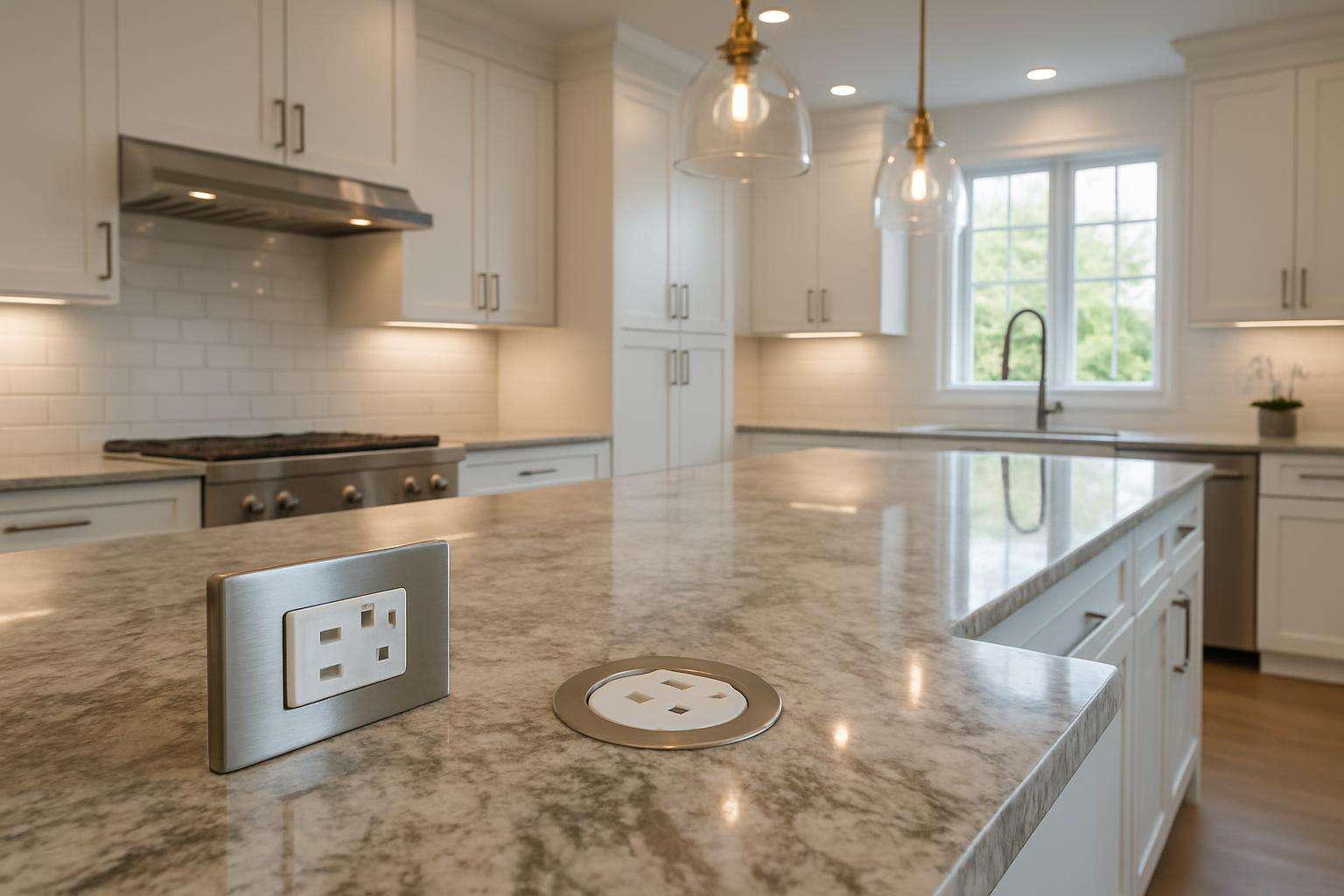
Power where you need it — without cluttering your backsplash or sacrificing a clean countertop line — is one of the hallmarks of a well-planned kitchen. Countertop outlet styles have evolved dramatically in the past decade, and today’s options are as much a design decision as a practical one. Whether you want a pop-up outlet that disappears flush when not in use, a recessed strip mounted at the back of the counter, or a discrete under-cabinet solution, choosing the right countertop outlet style shapes how your kitchen looks and functions every day.
Why Countertop Outlet Placement Matters
Electrical code in most jurisdictions requires outlets every 4 feet along countertop runs, but code compliance is just the starting point. The question of which countertop outlet styles best serve your kitchen comes down to workflow: where do you prep, where do you use appliances, and how visible do you want the hardware to be? A well-planned outlet layout eliminates extension cords, keeps the surface tidy, and adds genuine convenience to daily cooking routines.
Popular Countertop Outlet Styles
Pop-Up Outlets
Pop-up outlets are installed flush in the countertop surface and rise on demand with the press of a button or a gentle push. When closed, they sit nearly invisible — just a small flush cap in the stone surface. When open, they provide standard AC outlets and often USB charging ports as well. Pop-up countertop outlet styles are particularly popular on kitchen islands where backsplash real estate is limited and a clean surface line is a priority.
The main consideration with pop-up outlets in stone is the cutout — the opening must be precisely sized and the surrounding stone must be structurally sound. Our fabrication team coordinates with electricians on cutout dimensions before any stone is cut to ensure a perfect, clean fit.
Recessed Countertop Outlets
Recessed outlets sit below the plane of the countertop surface in a small well or channel cut into the stone. They are always accessible without any mechanical action, making them more convenient than pop-ups for frequent use. Recessed countertop outlet styles work especially well at the back edge of a countertop where they are visible but not intrusive, or in an island’s end panel where power is needed for occasional appliance use.
Under-Cabinet Outlets
Under-cabinet power strips are among the cleanest countertop outlet styles from a visual standpoint — they keep all the hardware entirely off the stone surface. Outlets mounted to the underside of upper cabinets put power exactly where small appliances sit: coffee makers, toasters, stand mixers. Because nothing penetrates the stone, there is no structural consideration for the countertop itself, and installation is straightforward.
Backsplash-Integrated Outlets
Standard wall outlets positioned at backsplash height — typically 18 to 20 inches above the countertop — remain the most common and code-compliant solution. Upgrading these to decorator-style outlets with matching plates in brushed nickel, matte black, or custom colors lets them coordinate with your hardware and fixtures while serving the same function. If your backsplash is a large-format stone slab, outlets can be positioned within the stone with precision cutouts for a refined look.
Wireless and Induction Charging Inserts
A newer category gaining popularity in luxury kitchens is the wireless charging pad embedded flush into the stone countertop surface. These Qi-compatible inserts sit beneath the surface and charge compatible devices placed on top — no cutout, no plug, no visible hardware at all. While not a substitute for AC power, wireless charging inserts complement other countertop outlet styles beautifully in an island application.
Stone Cutout Considerations
Any outlet that penetrates the stone surface — pop-up, recessed, or otherwise — requires a precise cutout. In granite, quartzite, and marble, these cutouts must be made with diamond-tipped tooling and reinforced if they fall within 1.5 inches of any edge or seam. The corners of outlet cutouts are particularly vulnerable to cracking if not properly relieved. Our team plans all countertop penetrations during the template phase to ensure structural integrity is maintained. The Natural Stone Institute provides technical guidance on stone fabrication and safe cutout practices.
Planning a kitchen remodel and wondering which countertop outlet styles best fit your layout? Contact us — our team will help you coordinate countertop fabrication with your electrician for a seamless result.
Frequently Asked Questions
Can you cut outlet holes in granite or quartzite countertops?
Yes — precision cutouts for outlets are routine in stone fabrication. The cutout must be carefully sized and the corners must be properly shaped to prevent stress cracking. Our team coordinates with your electrician on exact dimensions before cutting.
Are pop-up outlets waterproof?
Most pop-up countertop outlet styles are rated for damp locations but not wet locations. They should not be installed directly adjacent to a sink where direct water spray is likely. Check the specific product rating and follow your electrician’s guidance on placement relative to water sources.
Do countertop outlets need a GFCI breaker?
Yes — all countertop and kitchen outlets within 6 feet of a sink are required to be GFCI-protected by the National Electrical Code. This applies to all countertop outlet styles including pop-ups and recessed options.
What is the best outlet style for a kitchen island?
Pop-up outlets are the most popular choice for islands because they maintain a clean surface line and minimize visible hardware. Recessed outlets at the end panel are a close second for convenience. The best option depends on your island’s size, how frequently you use appliances there, and your design preferences.




Leave a Reply