
One of the most common questions homeowners ask during a countertop consultation is: “How do I know which edge profile is right for me?” The answer almost always starts with the kitchen itself. Your cabinetry style, the overall design direction of the space, and the architectural character of your home all send strong signals about which countertop edge will look most intentional and cohesive. At Impact Countertops in Columbus, Ohio, we’ve developed a straightforward approach to matching edge profiles to kitchen styles — and this guide shares that approach with you.
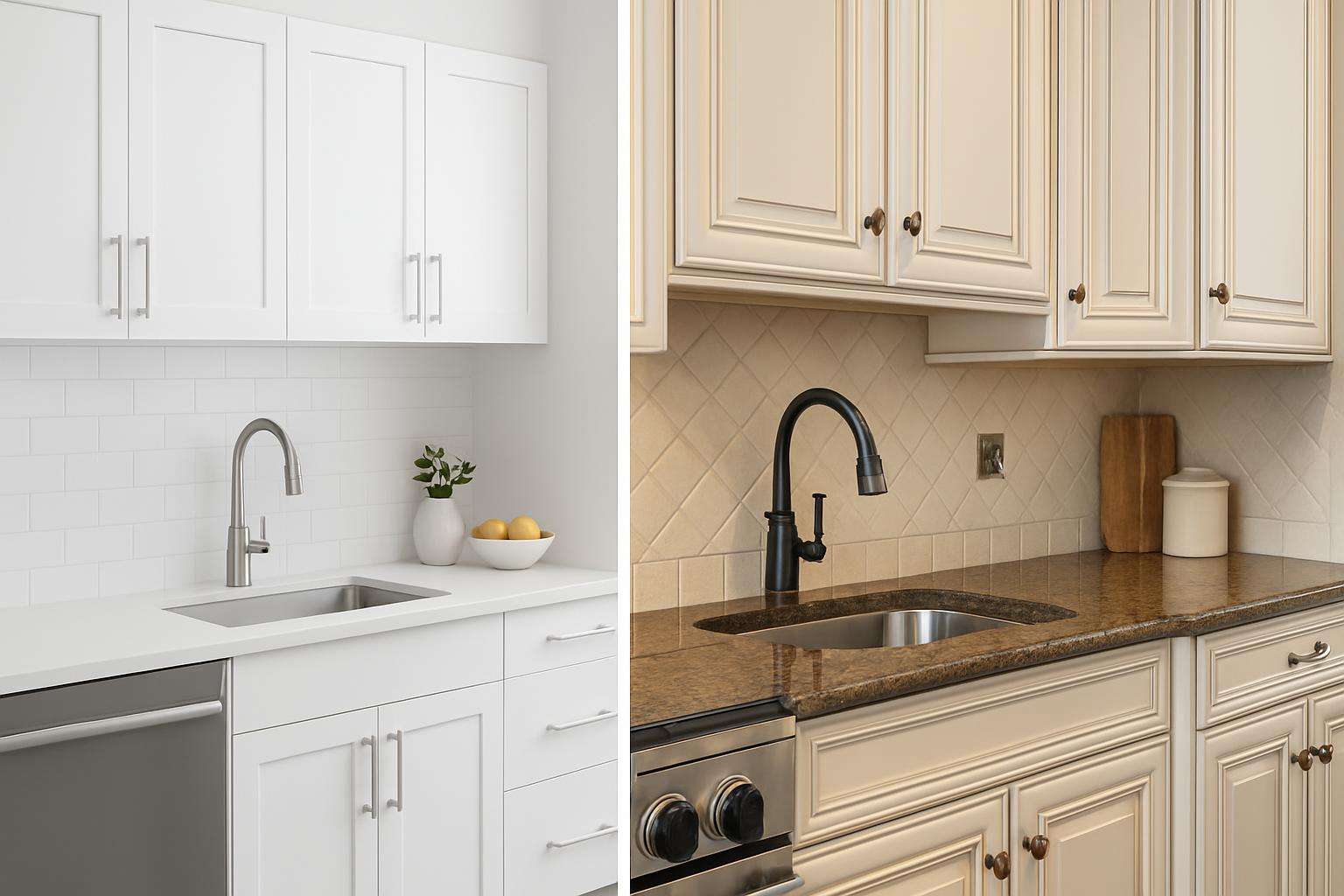
Understanding how edge profiles relate to design styles doesn’t require a degree in interior design. Once you know what to look for, the right choice becomes clear remarkably quickly.
Modern and Minimalist Kitchens
Modern kitchens are defined by clean lines, flat surfaces, and the absence of ornament. Flat-panel (slab-front) cabinetry, minimal hardware, and open shelving are common features. In this context, a countertop edge profile with any curves or decorative elements will feel at odds with the design language.
The eased edge is the definitive modern choice: flat on top, flat on the bottom, with subtly softened 90-degree corners. It keeps attention on the stone’s surface — its color, veining, and finish — rather than the edge itself. For those wanting a touch more visual interest, the pencil edge (a very slight rounding of the top corner only) is a close cousin that reads equally contemporary.
A waterfall edge — where the stone continues vertically down the island sides — is the modern kitchen’s most dramatic statement. Rather than adding decorative profile, it adds architectural mass, and it works best when the stone has strong, photogenic veining worth showcasing on a vertical plane.
Transitional Kitchens
Transitional kitchens bridge the gap between modern and traditional — they have clean lines but also warmth, some ornamentation but not excess. Shaker-style cabinets (with their recessed center panel) are the signature of transitional design, and they’re one of the most popular cabinet styles in American homes today.
For transitional kitchens, the beveled edge is a natural fit. Its angled top cut adds dimension without becoming ornate — it catches light beautifully and adds a sense of quality craftsmanship that complements the careful joinery of Shaker cabinetry. The half-bullnose is another strong transitional choice: its rounded top and flat bottom sit comfortably between the fully rounded traditional bullnose and the flat contemporary eased edge.
Transitional kitchens also support the dupont or step edge particularly well. The subtle stepping of this profile adds architectural interest without crossing into traditional ornamentation territory.
Traditional and Classic Kitchens
Traditional kitchens feature raised-panel cabinetry, decorative corbels, crown molding, and a general embrace of classical architectural detail. In this setting, a stark modern edge profile would feel mismatched — like wearing athletic shoes with a formal suit.
The ogee edge — with its elegant S-curve combining concave and convex elements — is the traditional kitchen’s natural partner. It echoes the decorative profiles found in the cabinetry’s raised panels and molding details, creating a unified, refined aesthetic. The full bullnose also works beautifully in traditional kitchens, its gentle roundness recalling the curves found in classical architecture and furniture.
Traditional kitchens also benefit from thick mitered edges that make the countertop appear more substantial — amplifying the sense of permanence and quality that defines the style.
Farmhouse and Rustic Kitchens
Farmhouse and rustic kitchens celebrate natural materials, handcrafted quality, and a warm, lived-in aesthetic. Open shelving, apron-front sinks, wood elements, and natural stone all fit naturally in this setting.
For farmhouse kitchens, the eased edge or beveled edge often works surprisingly well — the simplicity reads as honest and unaffected rather than modern. Honed (matte) finishes on the stone surface tend to suit the farmhouse aesthetic better than highly polished surfaces, adding to the natural, low-key quality of the space.
Ready to match the perfect edge to your kitchen’s style? Contact Impact Countertops in Columbus — we’ll help you land on the right choice with confidence.
Frequently Asked Questions About Countertop Edge Styles
What countertop edge goes with Shaker cabinets?
Shaker cabinets are a transitional style that pairs well with beveled, half-bullnose, or dupont (step) edge profiles. These profiles add visual interest and craftsmanship without becoming overly ornate. For a more modern Shaker look, an eased edge is also a clean, versatile option. The key is choosing an edge that complements the Shaker’s simple, structured joinery rather than overwhelming it.
What edge profile works best with flat-panel cabinets?
Flat-panel (slab-front) cabinets are the hallmark of modern kitchen design and call for an eased edge as the most natural partner. If you want a slightly more textured look without departing from a contemporary aesthetic, a thin bevel or pencil edge works well. Avoid decorative profiles like ogee, which will feel incongruent with the minimal geometry of slab-front cabinetry.
Is an ogee edge too traditional for a contemporary kitchen?
Generally, yes. The ogee edge’s S-curve profile has strong associations with classical architecture and traditional design. In a contemporary kitchen with flat-panel cabinets and minimal hardware, an ogee edge tends to feel out of place. However, design rules are meant to be flexible — some designers deliberately mix traditional edge profiles with modern elements for an eclectic effect. If you’re considering an intentionally mixed aesthetic, discuss it with your designer and fabricator.
Can I use different edge profiles in different parts of my kitchen?
Yes, and this is actually a popular approach. A common strategy is to use a dramatic waterfall or thick mitered edge on the island — the kitchen’s focal point — while using a simpler eased or beveled edge on the perimeter countertops. This creates visual hierarchy and lets you invest in a statement detail where it will have the most impact. The key is ensuring the two profiles don’t actively conflict with each other.
How do I see edge profile options before choosing?
At Impact Countertops, we provide physical edge profile samples during every design consultation. You can hold each sample against your cabinet door and see exactly how it looks in your specific kitchen context. We also discuss which profiles pair best with your stone material, cabinetry style, and overall design direction — making the final choice informed and confident rather than guesswork.
Leave a Reply